Simulation leadership for your residency program, without the full-time hire.
Trillium designs, launches, and sustains ACGME-aligned simulation programs, led by a physician educator.
EXPERIENCE BEHIND TRILLIUM
8 hospitals
56 ACGME-accredited programs
~800 trainees
System-level simulation leadership by a triple board-certified intensivist — Internal Medicine, Pulmonary Disease, and Critical Care Medicine.
Who this is for
Launching or expanding a program
Closing a gap in procedural competency or accreditation readiness
Simulation that depends on one overextended person
Packages
Gap analysis, resource and faculty inventory, prioritized 12-month roadmap.
Cases, run sheets, debriefing guides, assessment tools, faculty training.
Simulation Program Stewardship
Monthly retainer. Ongoing oversight, faculty development, quarterly review, scholarship support.
Every engagement is scoped to your program. Pricing is discussed on your call.
A clear path from need to implementation
1 — Assess
We start with your specialty, learners, faculty capacity, current resources, accreditation priorities, and the problem you most need to solve.
2 — Build
We define the scope and build the curriculum, assessments, faculty tools, or implementation plan around your actual environment — then prepare your team to facilitate, debrief, assess, and improve with confidence.
3 — Sustain
We help put the work into practice, review what is working, and identify the next improvements as your program grows.
Simulation modalities
Manikin-based scenarios
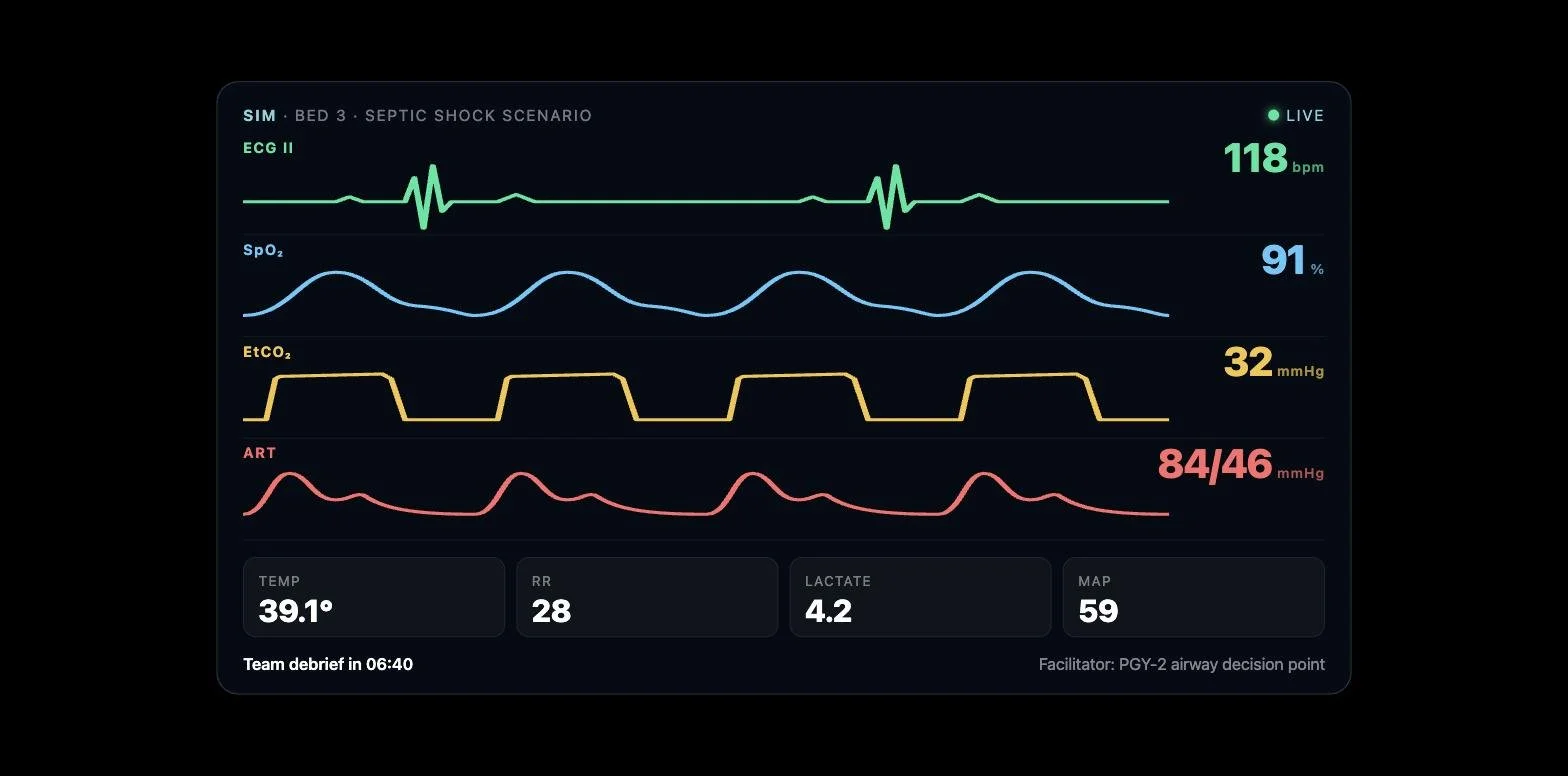
Sepsis, respiratory failure, arrhythmia, shock, and rapid-response cases run on high-fidelity simulators with scripted progression and decision points.
Procedural skills
Central venous access, arterial lines, thoracentesis, paracentesis, lumbar puncture, and airway management on task trainers with structured checklists and competency sign-off.
Point-of-care ultrasound
Cardiac, lung, abdominal, and vascular POCUS curricula that pair image acquisition on live models with interpretation and clinical integration.
Mock codes and in-situ simulation
Unannounced and scheduled events on real units to test systems, teamwork, and code response where care actually happens.
Facilitation and debriefing
Faculty trained in structured debriefing so every scenario ends in reflection, feedback, and a plan, not just a checklist.
Intern and fellow boot camps
Intensive orientation and readiness courses that get new trainees safe and confident before their first call.
What we help you build
From scattered activities to a sustainable simulation program
Engagements begin as clearly scoped projects with defined deliverables. After launch, programs can add an ongoing advisory retainer for continued refinement and support.
Simulation curriculum design
Progressive, specialty-specific curricula aligned with your program goals and ACGME milestones. Deliverables can include high-fidelity cases, run sheets, learner materials, and debriefing guides.
Procedural competency
Structured teaching and assessment tools for procedures such as central venous access, thoracentesis, paracentesis, airway management, and point-of-care ultrasound.
Faculty development
Practical workshops that help faculty facilitate simulation, conduct effective debriefings, write cases, and assess learner performance with greater consistency.
On-site education
Resident boot camps, procedure courses, faculty workshops, and other customized training delivered with your learners, faculty, and local resources in mind.
Program implementation
Hands-on guidance for governance, scheduling, faculty roles, workflows, equipment decisions, and documentation — so the curriculum can work in the real world.
Research and scholarship support
Support developing simulation-based education and quality-improvement questions into feasible projects, measurement plans, and scholarly work.
Not sure where to begin? Start with a focused review of your current resources, priorities, and gaps.
What your program gains
A curriculum your faculty can actually run — clear cases, run sheets, and debriefing guides designed for your environment, not a binder that sits on a shelf.
Consistent procedural assessment — structured tools that standardize how competence is taught and evaluated across faculty and sites.
Confident faculty — practical development in facilitation, debriefing, case writing, and assessment, so the program does not depend on one person.
A sustainable program — governance, scheduling, and workflows that survive beyond the initial launch and grow with your program.
Your consultant should understand both critical care and the realities of graduate medical education
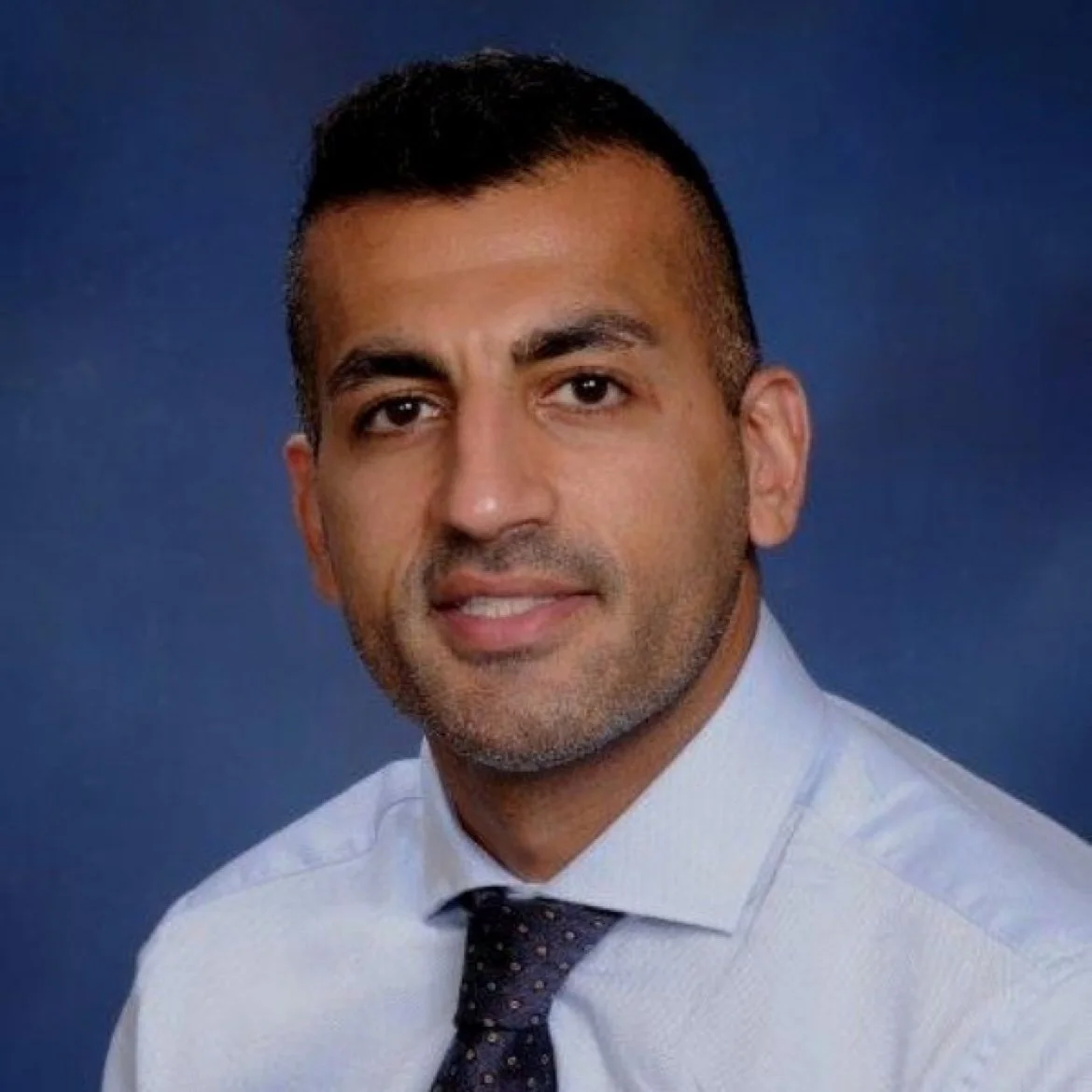
Trillium Simulation was founded by Siddarth Kathuria, MD, a triple board-certified physician in Internal Medicine, Pulmonary Disease, and Critical Care Medicine, and a fellowship-trained simulation educator. His system-level simulation leadership spans 8 hospitals, 56 ACGME-accredited programs, and approximately 800 trainees. His work includes multi-site governance, procedural competency, point-of-care ultrasound curricula, faculty development, and program implementation.
"The goal is not to hand you a stack of cases. It is to help you build a program your faculty can sustain and your learners can trust."
— Siddarth Kathuria, MD, Founder
Build the program you have been trying to make time for
Tell us about your program, your learners, and the simulation challenge on your list. We will help you identify a practical place to start.